
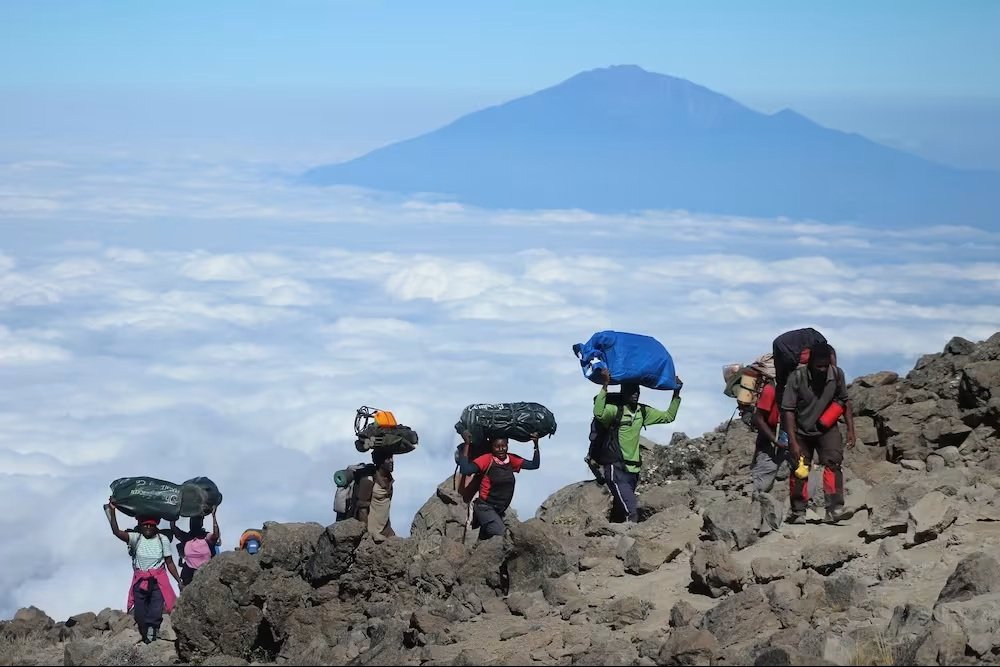
Kilimanjaro Guides and Porters: The Heart of Climbing Kilimanjaro
Climbing Kilimanjaro is one of the most iconic adventures in the world. Rising above the plains of Mount Kilimanjaro, this majestic peak attracts thousands of trekkers every year, all seeking the thrill of reaching Africa’s highest point. But behind every successful summit lies a team of dedicated professionals—Kilimanjaro guides and porters—whose expertise and hard work make the journey possible.
Why Guides Are Essential for Climbing Kilimanjaro
When it comes to climbing Kilimanjaro, guides are not optional—they are mandatory. The Tanzanian government requires all trekkers to be accompanied by licensed guides for safety and environmental protection.
Kilimanjaro guides are highly trained in mountain navigation, first aid, and altitude sickness management. As you ascend through different climate zones—from rainforest to alpine desert—they monitor your physical condition and adjust your pace to improve your chance of success.
More importantly, guides play a critical role in summit success. They know exactly how to pace the climb (“pole pole,” meaning slowly, slowly), which is one of the most important strategies for reaching the top. Their encouragement during the toughest moments—especially on summit night—can make all the difference.
The Vital Role of Porters in Climbing Mount Kilimanjaro
Porters are the backbone of every Kilimanjaro expedition. While climbers focus on trekking, porters carry the bulk of the equipment, including tents, food supplies, and cooking gear. This support allows trekkers to conserve energy and enjoy the journey.
During a typical climbing Mount Kilimanjaro expedition, each porter carries up to 20 kg (44 lbs) of gear across challenging terrain and high altitudes. They often hike faster than climbers, arriving at camp early to set up tents and prepare meals.
Without porters, climbing Mount Kilimanjaro would be significantly more difficult, if not impossible, for most people.
Life on the Mountain: Teamwork and Spirit
One of the most memorable parts of climbing Kilimanjaro is the sense of community built between climbers, guides, and porters. Even after long and exhausting days, porters often greet climbers with smiles, songs, and warm hospitality.
This unique team spirit transforms the climb into more than just a physical challenge—it becomes a shared journey. Many climbers say that the friendships formed on the mountain are just as meaningful as reaching the summit.
The Economic and Cultural Impact
Most Kilimanjaro guides and porters come from nearby communities in Tanzania. Their work supports families, funds education, and strengthens the local economy.
Beyond logistics, they also enrich the experience by sharing local traditions, language, and stories. Learning a few Swahili phrases or joining in a song can create lasting memories and deeper cultural connections.
Final Thoughts on Climbing Kilimanjaro

Mount Kilimanjaro climbing is often described as a once-in-a-lifetime adventure—but it is never a solo achievement. Every step toward the summit is supported by the dedication of guides and porters who work tirelessly behind the scenes.
As you plan your climbing Kilimanjaro tour, remember that choosing the right team is just as important as choosing the right route. By respecting and supporting the people who make the climb possible, you not only improve your chances of success but also contribute to a more sustainable and meaningful adventure.
In the end, reaching the summit of Mount Kilimanjaro is not just about standing at the top—it’s about the people who help you get there.
How to book your Kilimanjaro Tour
Contact Ernest Magic Tours & Safaris the best local tour operator, to begin planning your lifetime Tanzanian tour. From guided tours to personalized itineraries, Ernest Magic Tours & Safaris will make your Tanzania adventure unforgettable.